“희망을 배달해 준 한국의 하얀 가운 천사들”
이병문 기자
수정 2026-10-23 16:11
입력 2026-10-23 12:00
평택에서 서울성모병원으로 이어진 24시간의 드라마같은 기적
선천성 심장질환 넘어서 웃음 찾은 미군 신생아 플로레스 이야기
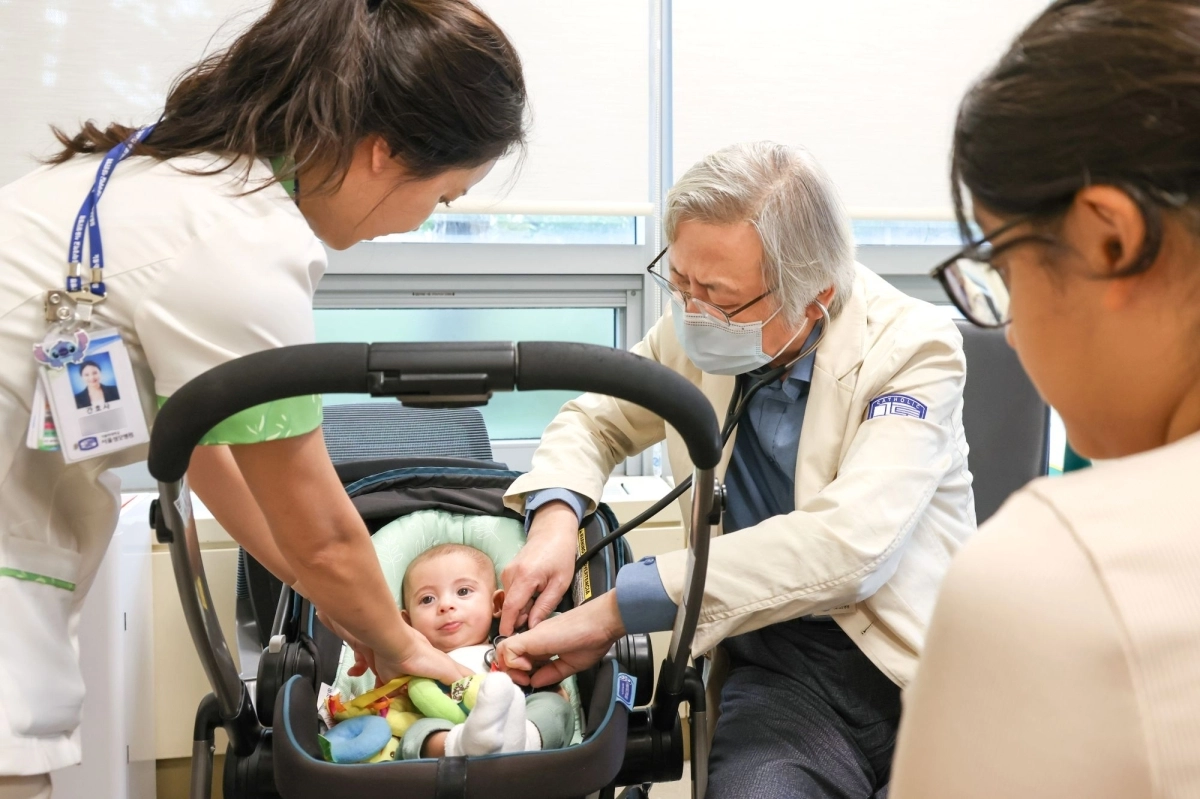
가을 햇살이 따스하게 내리쬐던 날, 평택 미군 부대 관사에는 미소가 예쁜 아기 플로레스(남아)의 옹알이 소리가 번져야 할 시간이었다. 그러나 어머니 마음은 며칠 전부터 무겁게 내려앉아 있었다. 갓 태어난 줄만 알았던 아이가 수유 때마다 심하게 숨을 헐떡였고, 먹은 것을 소화시키지 못한 채 괴로워했기 때문이다. “그저 분유가 잘 맞지 않거나 소화가 조금 안 되는 줄로만 알았습니다.“
처음엔 그저 흔한 영유아 소화불량일 것이라 스스로를 위안했다. 하지만 생후 2개월에 접어든 아이의 숨소리는 갈수록 가빠졌고, 급기야 심장이 터질 듯 빠르게 뛰기 시작했다. 놀란 부모는 즉시 평택 부대 병원으로 아이를 안고 달렸다.
부대 병원 의료진의 표정은 이내 어두워졌다. 아기 맥박은 정상 범위를 훨씬 뛰어넘어 매우 위태로웠고, 뚜렷한 심부전 증상과 함께 호흡곤란이 악화하고 있었다. 현장 의료진은 단초를 놓치지 않았다. 즉시 상급 종합병원의 전문적인 응급처치와 정밀검사가 필요하다는 긴급 판단이 내려졌다.
외국 땅에서 어린 자녀를 키우며 살아가는 미군 가족에게 ‘갑작스러운 대학병원 이송’이라는 단어는 거대한 공포로 다가왔다. 집안에 심장 질환을 앓았던 내력이 단 한 번도 없었기에 어머니의 당혹감과 슬픔은 더욱 컸다.
“가방을 챙길 시간조차 없었어요. 너무 무섭고 슬퍼서 미국에 계신 친정 가족들에게 전화를 걸어 오열했습니다. ‘우리 아기에게 무슨 일이 생긴 거냐’고 묻는 가족들의 목소리에 눈물만 흘렀습니다.”
남편은 어린 첫째 딸을 돌보기 위해 평택에 남아야 했고, 어머니는 아기 플로레스와 함께 낯선 한국의 대형병원으로 향하는 구급차에 몸을 실었다.
플로레스가 도착한 곳은 가톨릭대 서울성모병원 소아전문응급센터였다. 성인 환자들과 완전히 분리된 독립된 진료 공간, 24시간 상주하는 소아 응급 전문 의료진이 지키고 있는 골든타임의 최전선이었다.
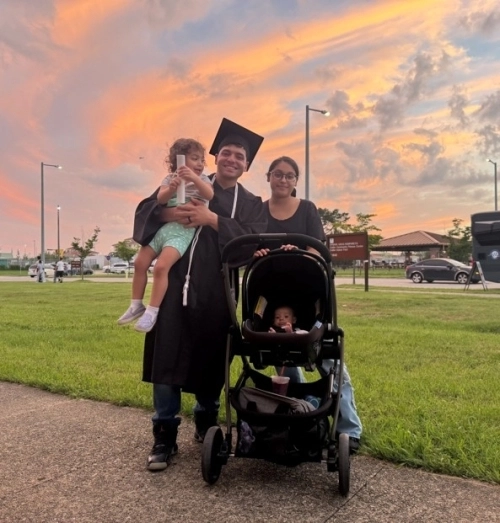
문제는 이뿐만이 아니었다. 심장 질환으로 인해 아이는 제대로 영양을 흡수하지 못하고 있었다. 생후 2개월이 지났음에도 몸무게는 출생 당시보다 겨우 300g 증가하는 데 그쳐 있었다. 심장 구조를 바로잡는 수술을 받지 않는다면, 심각한 성장 부진과 발달 장애는 물론 뇌와 간 등 주요 장기에 영구적인 손상이 올 수도 있는 일초가 급한 상황이었다. 그 순간, 소아 심장 수술 분야의 권위자인 심장혈관흉부외과 이철 교수가 구원투수로 나섰다. 지금까지 2,000례가 넘는 소아 심장 수술을 집도하며 수많은 어린 생명을 살려낸 이철 교수는 망설임 없이 아이의 수술을 결정했다.
낯선 언어와 문화, 아픈 아이를 혼자 품에 안고 떨고 있는 외국인 어머니에게 의료진은 든든한 버팀목이 되어주었다. 이철 교수와 소아청소년과 의료진은 수술 과정과 향후 치료 계획을 하나하나 친절하고 자세히 설명하며 불안에 떨던 어머니의 마음을 안심시켰다.
수술실 불이 켜지고, 이철 교수의 집도 아래 미세한 아기 심장을 다루는 정교하고 섬세한 교정 수술이 시작되었다. 일초의 오차도 허용되지 않는 긴장감이 수술실을 감쌌고, 마침내 멈춰 섰던 희망의 톱니바퀴가 다시 돌아가기 시작했다. 수술은 성공적이었다.
그러나 수술 후 입원 치료 과정 역시 어머니에게는 큰 산이었다. 급하게 이송되느라 기저귀나 분유, 배냇저고리 등 아기에게 필요한 기본적인 물품조차 제대로 챙겨오지 못했기 때문이다. 홀로 평택에서 첫째를 돌보는 남편의 도움을 받을 수도 없었던 고립무원의 상태였다.
이때, 서울성모병원 간호사들의 세심한 배려가 빛을 발했다. 간호사들은 사정을 알게 된 후 아기에게 필요한 물품들을 직접 챙겨주고, 잠시도 쉬지 못해 지친 어머니를 따뜻하게 위로해 줬다. 어머니는 당시를 떠올리며 감격에 겨운 고백을 전했다.
“갑작스러운 입원으로 아기 물품이 아무것도 없어서 너무 막막했습니다. 그런데 간호사 선생님들이 제 마음을 먼저 읽고 친언니처럼, 가족처럼 하나하나 세심하게 도와주셨습니다. 그 따뜻한 손길과 마음이 저를 견디게 해준 가장 큰 힘이었습니다.”
서울성모병원의 ‘성 니콜라스 어린이병원’이 지향하는 다학제 협진과 인간 중심의 진료 철학이 국경을 넘어 한 미군 가족의 마음 깊숙이 울림을 준 순간이었다.
성공적인 수술과 일주일간의 헌신적인 입원 치료를 마친 플로레스는 마침내 건강한 모습으로 퇴원했다. 그리고 지난 10월 13일, 수술 후 첫 외래 진료를 위해 다시 서울성모병원을 찾았다.
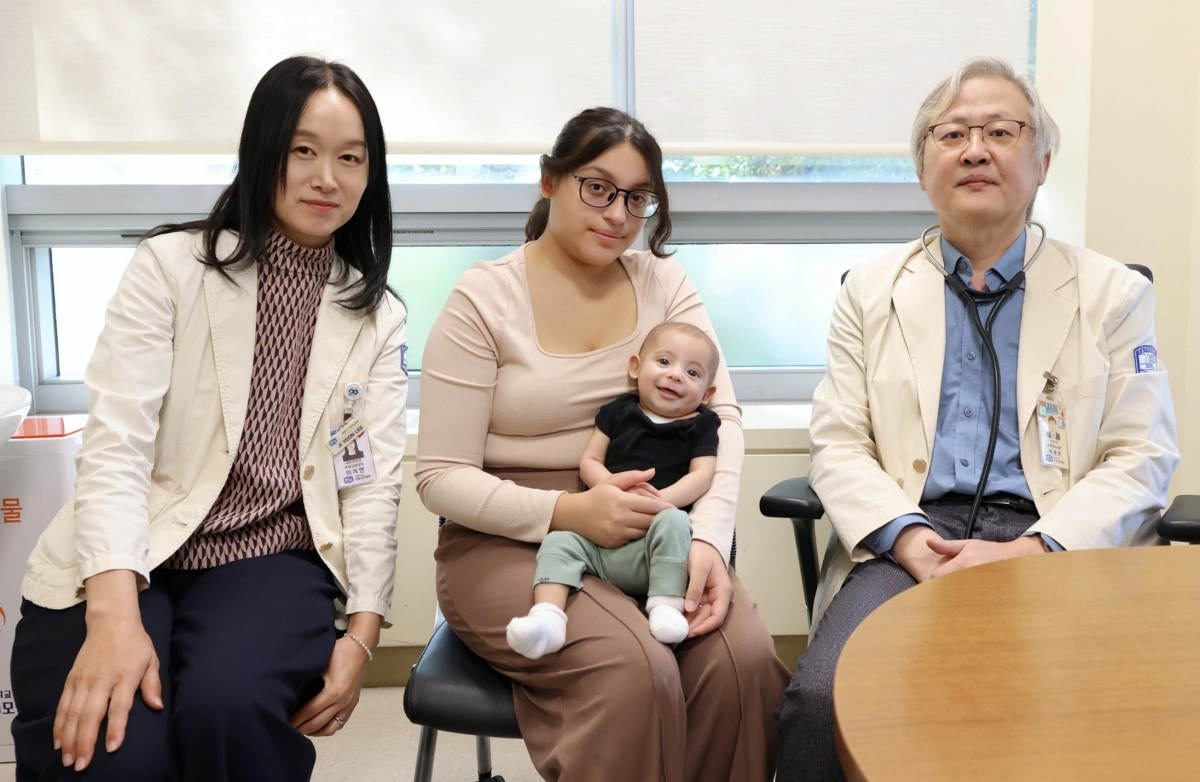
소아청소년 심장병 클리닉을 이끌고 있는 이재영 교수(소아청소년과)의 진료실로 들어선 아기 플로레스 모습은 처음 병원에 왔을 때와는 완전히 달라져 있었다. 축 처져 기운 없이 눈을 감고 있던 생후 2개월의 아기는 온데간데없고, 또렷한 눈망울로 진료실 천장과 의료진을 바라보며 연신 방긋방긋 예쁜 웃음을 지어 보였다.
이재영 교수는 아기와 눈을 맞추며 반가운 표정으로 연신 ‘인사’를 건넸다.
“아이고, 우리 플로레스! 진짜 많이 좋아졌네!”
이 교수는 청진기를 대고 아기의 심장 소리를 확인한 뒤 기쁜 소식을 전했다.
“처음 병원에 왔을 때는 아기가 기운이 없어 처져 있는 모습에 걱정이 참 컸습니다. 하지만 오늘은 눈빛도 너무 또렷하고 훨씬 활력이 넘칩니다. 수유도 아주 잘하고 있고, 심부전 증상도 완전히 사라져서 이제는 더 이상 약물을 복용할 필요조차 없는 완벽한 상태입니다.”
그 말을 들은 엄마의 눈시울이 다시 한번 붉어졌다.
“수술 후 아기가 하루가 다르게 기운을 되찾고 건강하게 회복하는 모습을 보는 것만으로도 너무나 기쁩니다. 아기에게 두 번째 삶을 선물해 준 한국의 의료진에게 어떤 말로 감사를 표현해야 할지 모르겠습니다. 앞으로도 아이가 이 사랑을 기억하며 건강하게 잘 자라주기를 기도합니다.”
플로레스의 사례는 단순한 한 개인의 치료 성공기를 넘어 신속한 응급 전원 시스템과 뛰어난 의료진의 협진이 만들어낸 값진 결실이다.
국제진료센터장 이지연 교수는 이번 치료 과정에 대해 깊은 자부심과 감사를 표했다.
“서울성모병원 국제진료센터는 미군 병원과 상시로 긴밀히 소통하며 주한미군과 그 가족들의 건강을 지키기 위한 전원 핫라인 시스템을 구축해 왔습니다. 특히 이번 사례는 소아전문응급의료센터의 신속한 응급 협조와 심장혈관흉부외과 이철 교수님의 뛰어난 수술 역량이 더해져 어린 생명을 골든타임 내에 구해낸 대표적인 모범 사례입니다. 앞으로도 미군 병원과의 협력을 더욱 강화해 국경을 초월한 의료 서비스를 제공하겠습니다.”
한국에 머무는 동안 플로레스는 서울성모병원에서 정기적으로 외래 진료를 받으며 예쁘고 건강하게 자라날 예정이다.
살아가는 동안 누구나 인생의 가장 어두운 터널을 지날 때가 있다. 만리타향에서 어린 자녀의 생명이 위태로웠던 미군 가족에게, 서울성모병원 의료진이 보여준 신속한 의술과 곁을 지켜준 따뜻한 정은 평생 잊지 못할 ‘기적의 순간’으로 남게 되었다.
가장 작고 약한 영혼에게 다시 뛸 심장을 선물해 준 그들의 이야기는 삭막한 세상 속에서 생명의 존엄함과 사람과 사람 사이의 따스한 온기가 무엇인지를 다시금 일깨워주고 있다.
*아래 글은 외국인 독자를 위해 영어로 번역한 기사입니다.
“Angels in White Coats: Delivering Hope in Korea”
-A Miracle Like a 24-Hour Drama from Pyeongtaek to Seoul St. Mary’s Hospital
-Baby Flores, a U.S. Military Newborn, Overcomes Congenital Heart Defect and Finds His Smile Again
On a warm autumn day, the sounds of a baby’s coos should have filled the family’s home in the U.S. military housing complex in Pyeongtaek, South Korea. But for the mother of baby Flores, the days leading up to that moment had been filled with growing anxiety.
Every time she fed her two-month-old son, he struggled to breathe. He seemed unable to tolerate his feeds, leaving him visibly distressed.
“At first, I thought the formula might not agree with him, or that he was simply having trouble digesting it,” she recalled.
She tried to reassure herself that it was a common problem among infants. But as Flores approached two months of age, his breathing grew increasingly labored. His heart began racing, and his condition rapidly deteriorated.
Alarmed, his parents rushed him to the medical facility serving the U.S. military community in Pyeongtaek.
The medical team quickly recognized that something was seriously wrong. His heart rate was far above the normal range, and he was showing clear signs of heart failure alongside worsening respiratory distress. The doctors determined that he needed immediate transfer to a tertiary hospital equipped to provide specialized emergency care and advanced diagnostic testing.
For a military family raising young children far from home, the prospect of an emergency transfer to a major hospital in an unfamiliar country was terrifying. With no known family history of heart disease, Flores’s mother struggled to understand how her seemingly healthy baby could have become so ill.
“There wasn’t even time to pack a bag,” she said. “I was so frightened and overwhelmed that I called my family in the United States and broke down crying. When they asked what had happened to our baby, all I could do was weep.”
Her husband stayed behind in Pyeongtaek to care for their young daughter, their first child. Flores’s mother climbed into an ambulance with her infant son and headed for a major hospital in Seoul, alone and uncertain about what lay ahead.
A Diagnosis That Could Not Wait
Flores was taken to Seoul St. Mary’s Hospital, home to a dedicated pediatric emergency center where children are treated separately from adult patients by medical professionals available around the clock.
The hospital’s International Healthcare Center and Pediatric Emergency Center immediately activated an emergency patient-transfer hotline established in coordination with the U.S. military hospital.
As soon as Flores arrived, the medical team began a series of urgent examinations.
The diagnosis was a ventricular septal defect, a congenital heart condition in which a hole in the wall separating the heart’s two lower chambers allows blood to flow abnormally between them. The resulting strain on the heart can lead to heart failure and impair its ability to circulate blood effectively throughout the body.
The heart defect was also taking a toll on Flores’s growth.
Because his condition made feeding difficult and placed excessive demands on his body, he had gained only about 300 grams since birth, despite being nearly two months old.
Without surgery to repair the defect, doctors feared that he could develop severe growth and developmental problems. In the worst case, prolonged circulatory failure could damage vital organs, including the brain and liver.
There was little time to lose.
Chul Lee, a professor of thoracic and cardiovascular surgery and a specialist in pediatric cardiac surgery, took charge of the case. Having performed more than 2,000 pediatric heart operations, he recommended surgery without delay.
For Flores’s mother, the uncertainty of the medical crisis was compounded by the unfamiliar language and culture. Alone with her critically ill infant, she needed reassurance as much as she needed answers.
Lee and the pediatric team carefully explained the operation, the anticipated course of treatment and the steps that would follow. Their willingness to answer her questions helped ease some of the fear that had overwhelmed her since the emergency transfer.
Then the operating room doors closed, and the surgery began.
Working with extraordinary precision on Flores’s tiny heart, Lee and his team set out to repair the defect. After a tense operation, the procedure was successful.
For the first time since the crisis began, there was reason to hope.
The Small Gestures That Made a Difference
The challenges did not end when Flores came through surgery.
Because the transfer had been arranged in an emergency, his mother had arrived without many of the basic supplies needed to care for an infant, including diapers, formula and clothing. Her husband was still in Pyeongtaek caring for their daughter, leaving her without immediate family support at the hospital.
The nursing staff stepped in.
After learning about her circumstances, nurses helped gather the supplies Flores needed and offered comfort to a mother who had barely had time to rest. Their assistance went beyond the demands of medical care, addressing the practical difficulties of being alone with a hospitalized baby far from home.
“The sudden admission left me feeling completely helpless because I had brought none of the things my baby needed,” his mother said. “But the nurses seemed to understand what I was going through before I even had to explain it. They cared for us like older sisters, like family. Their kindness gave me the strength to get through it.”
For the hospital, the episode reflected a broader philosophy of care: treating not only a patient’s medical condition but also the family members who must navigate a frightening and unfamiliar experience alongside them.
At Seoul St. Mary’s Hospital, that approach is part of the mission of its St. Nicholas Children’s Hospital, which emphasizes multidisciplinary care and a patient-centered approach.
In Flores’s case, the compassion of the nursing staff became an essential part of his mother’s experience of treatment, even as surgeons and pediatric specialists worked to restore his health.
After successful surgery and a week of inpatient care, Flores was well enough to go home.
A Different Baby Returns
On Oct. 13, Flores returned to Seoul St. Mary’s Hospital for his first outpatient appointment since surgery.
The change was striking.
At his initial admission, the two-month-old had been weak and lethargic, his eyes often closed as he struggled to cope with his illness. Now, sitting in the examination room of Jae-young Lee, a pediatrician who leads the hospital’s pediatric cardiology clinic, he looked like a different child.
His eyes were bright. He gazed curiously at the ceiling and the medical staff, breaking into repeated smiles.
“Look at you, Flores! You’ve gotten so much better!” the doctor said warmly as he greeted the baby.
After listening to his heart with a stethoscope, Jae-young Lee delivered the news his mother had been longing to hear.
“When Flores first came to us, we were very concerned because he was so weak and lethargic,” the doctor said. “Today, his eyes are bright, and he is much more active. He is feeding well, and his symptoms of heart failure have completely resolved. He no longer needs medication.”
His mother’s eyes filled with tears once again, this time with relief.
“Seeing him regain his strength day by day after surgery has been such a joy,” she said. “I don’t know how to express my gratitude to the Korean medical team for giving my baby a second chance at life. I pray that he will grow up healthy and carry the memory of this kindness with him.”
A Lifeline Across Borders
Flores’s recovery was the result not only of a successful operation but also of a coordinated emergency response that connected a military medical facility with specialists at a major Korean hospital.
Ji-yeon Lee, director of Seoul St. Mary’s Hospital’s International Healthcare Center, said the case demonstrated the importance of maintaining close working relationships with military medical providers serving U.S. personnel and their families in South Korea.
“Our center has established an emergency patient-transfer hotline and maintains close communication with U.S. military hospitals to help protect the health of service members and their families,” she said. “In this case, the rapid response of our pediatric emergency team, combined with Professor Chul Lee’s surgical expertise, helped save a young child’s life within the critical window for treatment.”
She added that the hospital intended to strengthen its cooperation with military medical facilities to provide coordinated care across national and cultural boundaries.
While the family remains in South Korea, Flores will continue to receive regular outpatient follow-up at Seoul St. Mary’s Hospital as he grows.
For his mother, the experience has left a lasting impression of a place that became a refuge at the moment she needed one most.
There are moments when life seems to narrow to a hospital corridor, a set of test results and the uncertain wait outside an operating room. For Flores’s family, far from relatives and familiar surroundings, the prospect of losing a child had transformed an ordinary day into a crisis.
What followed was a combination of medical urgency, surgical skill and small acts of kindness: a transfer arranged without delay, a delicate operation on a tiny heart, and nurses who made sure a frightened mother had what she needed to care for her baby.
The doctors repaired Flores’s heart. The nurses helped his mother endure the days that followed.
And when the family returned for that first follow-up visit, the baby who had once arrived struggling to breathe was smiling at the people who had helped him recover.
For a family thousands of miles from its wider support network, the experience became a reminder that, in a medical emergency, care can cross borders—and that sometimes the most profound reassurance comes not only from the treatment that saves a life, but also from the people who refuse to let a family face its fear alone.
(Lee, Byoung mun, Medical Correspondent, Seoul Shinmun)
이병문 의학전문기자
세줄 요약
- 평택 미군 가족 아기 플로레스, 호흡곤란으로 긴급 이송
- 서울성모병원서 심실중격결손 진단, 이철 교수 수술 집도
- 간호사 돌봄 속 회복, 첫 외래서 건강한 웃음 확인
Copyright ⓒ 서울신문 All rights reserved. 무단 전재-재배포, AI 학습 및 활용 금지
[ 내안의 AI 본성 분석 :
UNMASK ]
기사 읽는 습관에 숨겨진 당신의 MBTI는?
Q.
기사를 다 읽으셨나요? AI 퀴즈로 핵심 점검!
플로레스에게 진단된 선천성 심장 질환의 명칭은?